Goats, Tea and Trouble 🌙
A Nomadic Folk Tale Told Through AI Video and Original Music — The Trilogy of the Nomads
Some stories arrive long before the music does. Goats, Tea and Trouble began as a slow-burning fable set on Africa’s western coast: a night of firelight, tea, goats, stolen cloth, village gossip and a shepherd who carries an old curse with more humour than fear.
This song is the echo of that story: a soundscape born from a nomad’s bonfire, a missing cloth, a restless herd, and the quiet resistance of people who still live by rhythms older than modern convenience. Before or after you listen, read the story that inspired it.
The video was generated scene by scene using Sora, and it marked my first real attempt at creating a complete musical videoclip with AI-generated moving images. Until then, AI video had mostly felt to me like a sketchbook for isolated shots. Here the challenge was different: the images had to behave like cinema, keeping rhythm, continuity, characters and atmosphere alive across an entire song.
The song itself is sparse and acoustic, built to feel as if heard from a short distance away: carried by sand, smoke, tea steam, animal bells and sea wind. The shepherd may be imaginary, but the emotional material behind the piece is very real.
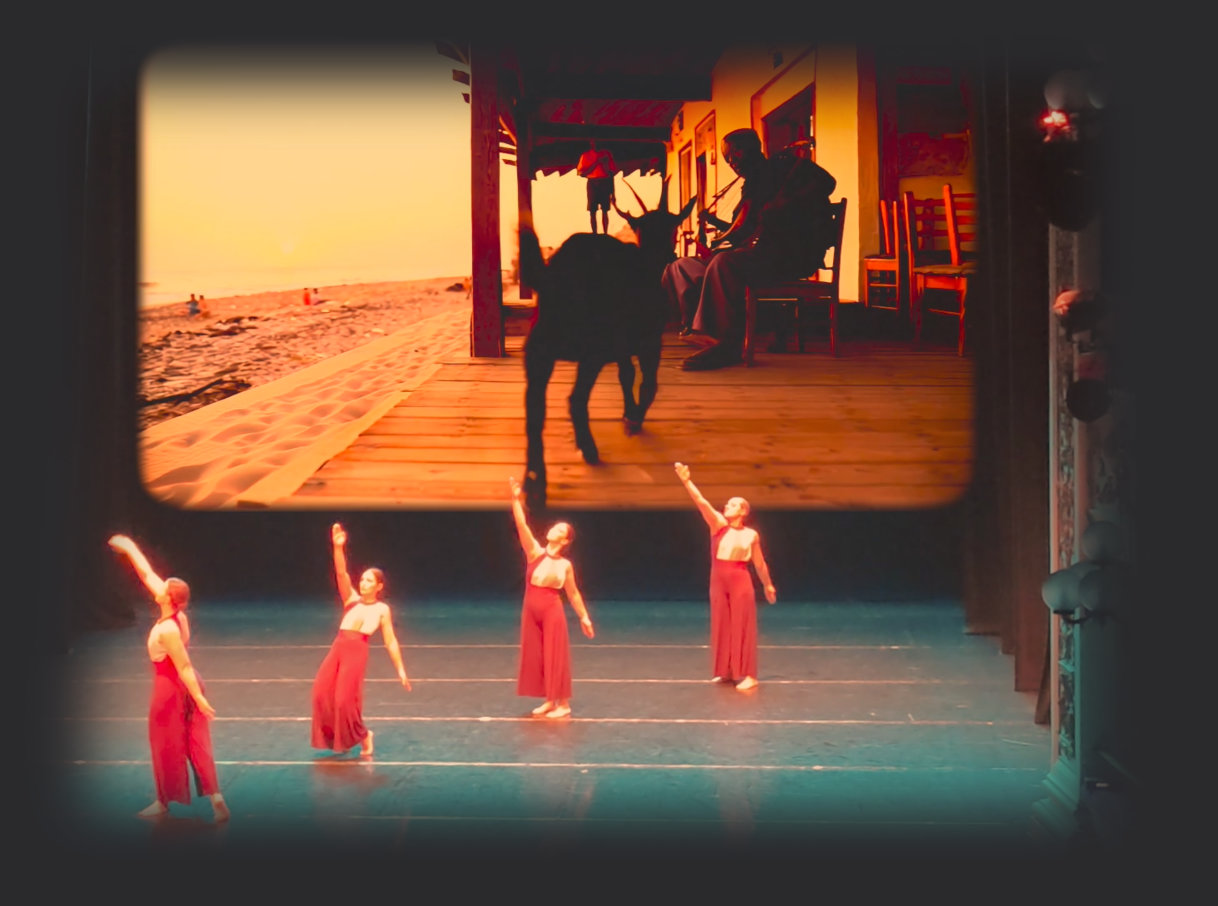
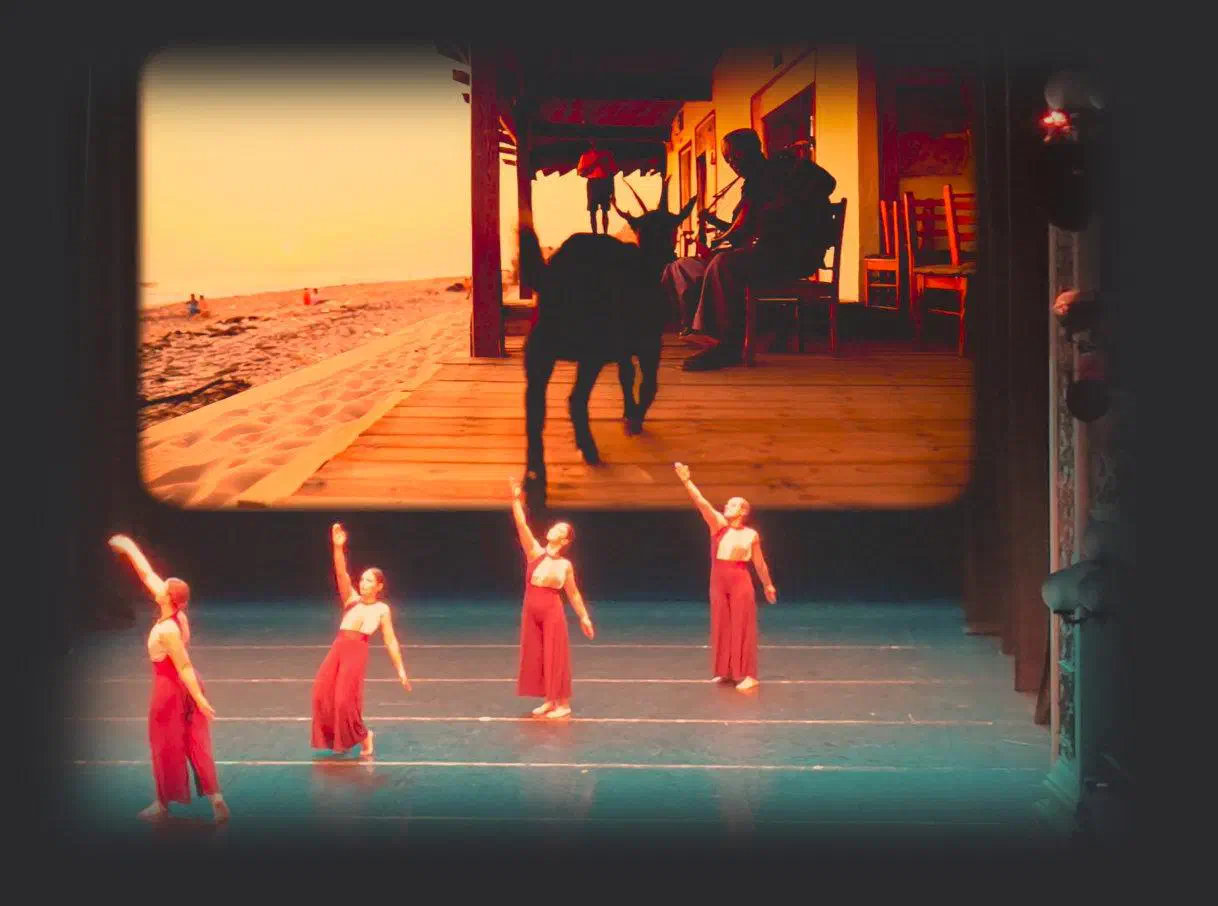
Live performance at Teatro Marrucino, Chieti
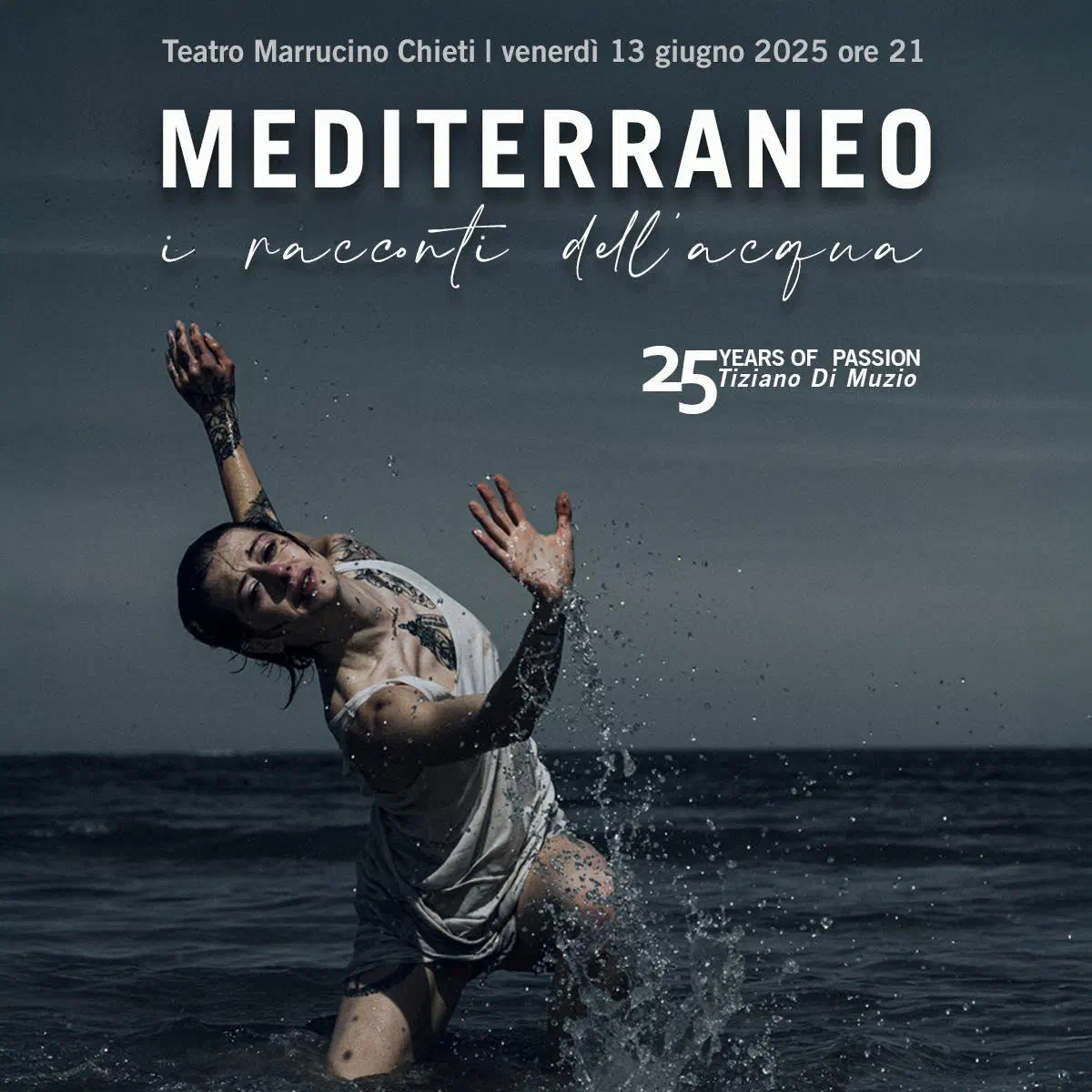
The video above was captured during MEDITERRANEO – I racconti dell’acqua — Mediterranean: The Tales of Water — presented at Teatro Marrucino in Chieti on 13 June 2025 for the 25th anniversary of Tiziano Di Muzio’s artistic journey with Centro di Formazione Professionale PROGETTO DANZA a.s.d.
This performance is the real origin of Goats, Tea and Trouble. The song was originally commissioned by Bruna Cerasa for her choreography, before it later became a complete Sora-generated videoclip and the first chapter of The Trilogy of the Nomads.
Bruna had recently travelled through Morocco and returned with strong impressions of its coastline, water, colours and sound world. Among the recordings she shared with me was an elderly man playing a bowed North-African string instrument — a [Maghrebi rebab](Maghrebi Rebab ), or a closely related local variation. That fragment became one of the seeds of the song. In the music, his melodic gesture is not quoted raw, but transformed: gently re-timed, pitch-corrected and adapted to fit the harmony of the refrain. In the final refrain of the videoclip, he still appears like a small apparition from the original spark that generated the piece.
On stage, the song passed through bodies. Four young dancers moved beneath the projected Sora visuals, turning the imaginary shore, goats, firelight and sea wind into a live theatrical space. Bruna Cerasa’s sensitivity as dancer, performer and poet made that transformation feel natural: her choreography held together travel memory, water imagery, Mediterranean colour and a taste for fable. Tiziano Di Muzio’s wider artistic frame gave the evening its continuity, connecting the piece to a long local history of dance training, theatre-dance and choreographic work in Chieti.
For me, that was the most moving aspect of the project. Goats, Tea and Trouble did not remain only a studio recording or an AI video experiment. It became breath, gesture, fabric, balance, light and movement inside one of Chieti’s most historic theatres.
A first complete Sora videoclip
Working with Sora felt very different from producing a conventional video edit. In a normal shoot, the camera records what exists. Here, every shot had to be invoked, negotiated and re-invoked through language. The tool became less like a camera and more like a strange visual interpreter: powerful, surprising, sometimes literal, sometimes poetic, and sometimes stubbornly wrong in exactly the way dreams are wrong.
That made the videoclip a hybrid object. It is not animation in the traditional sense, because the imagery keeps reaching toward photographic plausibility. It is not live action, because no camera crew ever stood on that shore. It is closer to a visual folk tale assembled from prompts, corrections, musical cues and accidents.
The most interesting discovery was that AI video becomes richer when it is not asked merely to decorate a track, but to carry a fragile continuity of mood. The goats needed to be funny without becoming cartoonish. The coast needed to feel ancient without becoming a museum diorama. The people around the fire had to feel present, dignified and ordinary, not exotic props in a fantasy postcard.
In that sense, Goats, Tea and Trouble became my first experiment in making Sora behave like a small nomadic film crew following a myth that never fully explains itself.

Between Australia and the western African shore
Although the tale is set along an ambiguous stretch of Africa’s Atlantic coastline, its emotional origin is also tied to my years in Australia, especially the period I spent around Alice Springs, Yulara and the Red Centre as a tour guide, in contact with Aboriginal cultures and with Aṉangu people from the Uluṟu and Mutitjulu area.
This is not an Aboriginal story, and it does not attempt to reproduce any specific sacred narrative. Some stories are not mine to tell. What remained with me instead was a way of listening: the understanding that land is not just scenery, and that a path through a landscape can also be a path through memory, law, humour, warning, kinship and song.
Bruce Chatwin’s The Songlines shaped that feeling strongly, not as an academic authority to be repeated uncritically, but as a literary provocation. Around it, other books formed a private constellation of nomadic imagination and travel consciousness: Douglas Lockwood’s Up the Track, Bill Harney’s To Ayers Rock and Beyond, Thor Heyerdahl’s works — especially Fatu-Hiva: Back to Nature — the travel writing of Tiziano Terzani, and Roy Lewis’s brilliant prehistoric satire The Evolution Man. They are very different books, but they kept circling around similar questions: what happens when people move through a landscape instead of merely occupying it? What survives in humour, myth, taboo, memory, improvisation and oral knowledge?
Those ideas stayed in the background when this new tale began to form. The shepherd is not following a tourist route. He is moving through a lived territory. The coastline, the fossil, the fire, the tea shack, the animals and the night visits from villagers are not decorative details; they are points in a living pattern.
One small musical detail carries this memory directly: the short fretless bass solo. Its melodic contour was inspired by a moment in St Kilda, near Adelaide, when I watched young Aboriginal people playing a very old string-figure game with loops of string stretched, crossed and transformed across their hands. I never learnt the local name for it. In English, such practices are often described generally as string games, string-figure games or cat’s cradle, although different Aboriginal groups have their own names, figures and meanings.
What stayed with me was not a tune, but a gesture: fingers passing through tension, symmetry, knots and openings. Years later, I translated that remembered hand choreography into a brief fretless bass phrase — sliding rather than fretted, flexible rather than square, more like a line being pulled through the hands than a solo placed on top of a track.
The ammonite fossil belongs to the same symbolic field. It is a spiral of ancient sea life, found at dusk and carried back to camp like an object caught between commerce and wonder. The shepherd may intend to sell it, but the story refuses to reduce it to a commodity. It sits there as a reminder that the land has its own time, far older than human plans.
The goats add the necessary trouble. Their thefts are comic, but comedy is not the opposite of seriousness. In many oral traditions, trickster behaviour opens questions that solemn speech cannot ask. Why do we own things? What can be taken? What must be returned? When does mischief become law? In this story, the cursed goats turn theft into a social event. They force the villagers to walk out at night, gather by the fire, drink tea, complain, laugh and keep the shepherd within the human circle.
That, to me, is the deepest layer of the story: the curse is not only a punishment. It is also a mechanism of community. The goats steal, and people meet.
Cinematic and artistic coordinates
The videoclip is not a direct homage to any single film, but certain artistic coordinates hovered nearby while I was shaping it.
One is Souleymane Cissé’s Yeelen, where myth, family conflict, elemental forces and inherited knowledge become a cinematic language rather than fantasy decoration. Another is Djibril Diop Mambéty’s Touki Bouki, especially in the way it allows the surreal and the ordinary to occupy the same frame. In Goats, Tea and Trouble, a goat stealing cloth from a tea shack is comic realism; a curse binding the herd to ancient theft is myth. The two belong to the same night.
There is also a distant affinity with non-verbal, music-driven cinema such as Godfrey Reggio and Philip Glass’s Koyaanisqatsi. My video remains narrative, but it still depends on the idea that image and music can carry meaning without explanatory speech.
The Australian connection points toward another artistic constellation: songlines, desert painting, ceremonial movement, oral memory and visual storytelling. Exhibitions such as Songlines: Tracking the Seven Sisters have shown how story can move across painting, photography, song, dance, objects and multimedia, while the Papunya painting movement demonstrated how ancestral Dreaming stories linked to land, history and culture could enter contemporary visual art while still demanding cultural care and protocol.
I do not claim those traditions as material. I carry only the impression they left on me: that art can be a form of navigation, and that a place is never empty when people have sung, walked, named, remembered and dreamed it for generations.
The Trilogy of the Nomads
Goats, Tea and Trouble became the first movement of what I began to imagine as The Trilogy of the Nomads: three musical tales about wandering figures who live at the edge of maps, systems and settled explanations.
This first chapter belongs to firelight, goats and the Atlantic wind. It is deliberately small in scale. Nothing explodes. No kingdom falls. No hero wins a battle. A shepherd finds a fossil, drinks tea, loses control of his herd, receives visitors, and sleeps under the stars.
The second movement continues with citysink , set in Berlin and moving through another kind of underground mythology.
The third movement is THEHERAOFHANS , a short film rather than a song-driven videoclip. It does not feature an original musical composition in the same way, but it points toward a real story and a documentary trace of modern nomadic life, again in Germany, this time in the south.
I would love one day to expand the trilogy further with stories drawn from Australia and New Zealand, completing a broader personal map of travel, migration, memory and wandering.
The story
The tale unfolds across a single night — from sunset to sunrise — on an undisclosed stretch of Africa’s western coastline. It was first imagined somewhere between Safi and Essaouira, but its atmosphere gradually moved closer to rural coastal Mauritania. That ambiguity is intentional. The story does not belong to one precise map point; it belongs to a coastline of memory.
The community is humble and enduring. People live in wooden shacks and improvised huts near the beach, sustained by the sea, sparse land and shared routines. There is no electricity. Evenings are lit by fire, oil lamps and stars.
The protagonist is a solitary shepherd, a nomad by tradition and temperament. He travels with his goats, searching for grazing grounds and collecting small treasures along the way: fossils, mineral fragments, bones polished by salt and time. These finds are later sold in nearby souk markets.
At dusk, he discovers a large ammonite fossil among the rocks and carries it back to his camp, a simple rug laid near twisted argan trees. His belongings are few: a jute sack, a weathered handcart, plain earth-toned clothes, and the fire he prepares each night for warmth, cooking and protection.
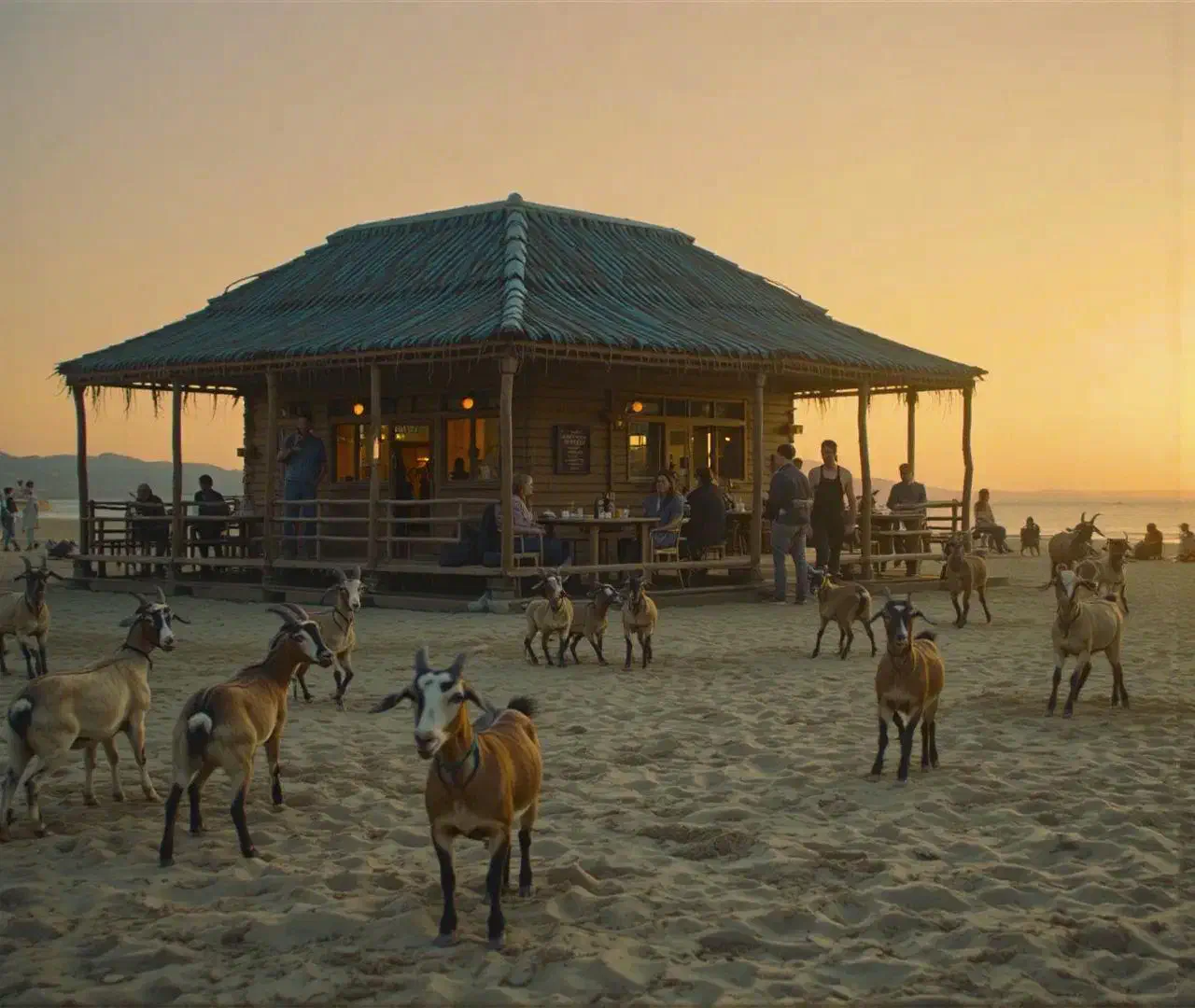
Nearby stands a small beach shack serving tea. It is more than a café; it is the village’s gathering point, where wanderers and locals meet, trade news and play music under oil lamps. Tonight, a Maghrebi rebab sings above hand percussion, voices, steam and sea wind.
The shepherd walks over, leaving the goats to their usual calm and cunning. One self-assured animal follows him onto the porch, slips into the shadows, and returns holding a strip of cloth between its teeth. Someone laughs. Someone shouts. It is not the first time.
Soon the stories begin again. These goats have been stealing for nights: shawls, towels, bits of clothing, even a shoe once. No one can explain it. People chase them, but they vanish into the dunes as if the darkness itself has agreed to hide them.
Later, villagers come to the shepherd’s fire, not with anger but with weary amusement. Some bring goats back. Others simply sit, drink tea, and ask why this keeps happening. The shepherd smiles and says little. The truth is more complicated than they would believe.
According to legends passed down through his family, the goats are under an old spell, bound to steal things — perhaps as an echo of trade, perhaps as a warning about taking what is not freely given. The curse does not touch only the nomad. It touches buyers and thieves too. They feel it differently. They feel it harder.
Yet among the locals, this trouble has become a quiet ritual. A reason to step out into the night. A pretext to speak with the shepherd, who seems to belong to an older way of life. As modernity presses in from the edges, these late-night visits become a soft resistance: human, humorous, rooted in story.
When the last visitor has gone and the goats have returned — except the one still chewing on a piece of someone’s headscarf — the shepherd lies beside the fire and stares up at the stars. He dreams of things he is not meant to do: selling the land’s fat, playing music for money, breaking old codes. In the dream, someone always laughs when he gets it wrong.
Then he wakes.
Dawn breaks. The goats begin to stir. A new day begins, the way it always has.
The ammonite fossil lies on the shore.
It has not moved.
Not yet.
References and further coordinates
- Bruna Cerasa — public bio on Neutopia
- Tiziano Di Muzio — Balletto di Roma profile
- Terre di Chieti — Tiziano Di Muzio celebrates 25 years of dance and theatre
Australia, songlines and string figures
- Australian Museum — How to make traditional matjka-wuma string figures
- Australian Museum — Survival and revival of the string figures of Yirrkala
- AIATSIS — The Marlaloo Songline
- National Museum of Australia — Songlines: Tracking the Seven Sisters
- National Museum of Australia — Papunya collection
- Flinders University Museum of Art — String figure prints by Yirrkala artists
Books, films and artistic coordinates
- Penguin Random House — Bruce Chatwin, The Songlines
- National Library of Australia — W.E. Harney, To Ayers Rock and Beyond
- Internet Archive — Thor Heyerdahl, Fatu-Hiva: Back to Nature
- Penguin Random House — Roy Lewis, The Evolution Man
- BFI — Souleymane Cissé’s Yeelen reviewed
- Criterion — Djibril Diop Mambéty’s Touki Bouki
- Philip Glass — Koyaanisqatsi